Productive Learning in Finland
JOPO
Flexible basic education (JOPO) in Finland
Flexible basic education (JOPO – joustava perusopetus) is a pedagogical approach within the Finnish comprehensive school system designed for students in grades 8 and 9 who benefit from more individualized and functional learning methods. It combines general education with learning in workplaces and other real-life environments, typically in small groups with strong guidance and support. The aim is to strengthen students’ motivation, improve school engagement, and support their transition to upper secondary education.
Within this framework, Flexible Basic Education is a high priority intensive productive education program within the Finnish comprehensive school system.
JOPO
“Bringing learning to where it is needed”
What happens when learning is moved beyond the classroom into real workplaces, real schedules, and becomes part of productive work? In practice, this question has been answered in Keuruu, Central Finland, for over 15 years.
The answer is JOPO.
Learning beyond school as a professional learning community (PLC)
In Keuruu, learning extends beyond school into workplaces, projects, fundraising activities, and event production. Together, these form a professional learning community (PLC) where students, teachers, entrepreneurs, and community actors share responsibility for learning.
This ecosystem connects education, working life, and local development into a dynamic learning and employment network. The surrounding community becomes an active co-educator, not just a partner.
Entrepreneurship education – building “Me Ltd.”
A distinctive feature of JOPO in Keuruu is its strong emphasis on entrepreneurship education. Students are encouraged to see themselves as active agents—often described through the idea of “Me Ltd.” (Oy Minä Ab).
This means that each student:
- develops ownership of their learning and future
- recognizes their strengths and interests as personal assets
- practices initiative, responsibility, and decision-making
Entrepreneurship education is embedded in authentic action. Students engage in:
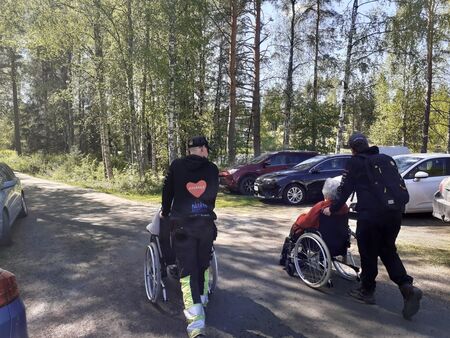
- event organization (e.g. local and national events)
- fundraising and sales activities
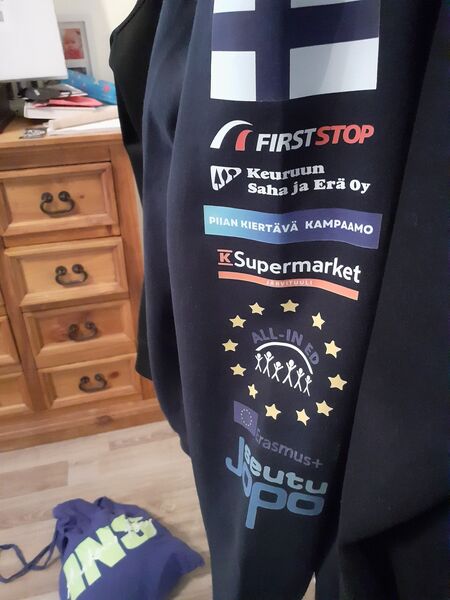
- product design and implementation (such as JOPO hoodies)
- collaboration with local businesses and organizations
These activities mirror real entrepreneurial processes: identifying needs, planning, executing, evaluating, and improving.
JOPO as part of a local employment ecosystem
JOPO functions as a bridge between school and working life and plays an important role in strengthening local employment pathways.
Students:
- apply for their own work placements, experiencing real recruitment processes
- participate in regular workplace learning periods
- build early connections with local employers
This creates mutual benefits: students gain realistic career insights, while employers connect with potential future employees. Workplace periods often lead to summer jobs, part-time work, and even apprenticeship opportunities.
Emergence and innovation through practice
The close interaction between school and working life enables the emergence of new practices and solutions.
Examples include:
- workplace periods developing into summer job pathways
- company visits evolving into long-term partnerships
- student projects becoming local events or services
This reflects a flexible and entrepreneurial approach where new ideas are created through practice and collaboration rather than predefined models.
Skills for working life and entrepreneurship
Through learning in real environments, students develop essential competencies:
- job-seeking skills (CV writing, applications, communication)
- responsibility and independence
- punctuality and time management
- teamwork and adaptability
- problem-solving and situational awareness
- understanding of workplace culture and ethics
Attitude is central: when students develop a constructive approach to work and learning, other skills follow.
Assessment is also authentic, as students demonstrate their competence in real-life situations.
Community as a shared learning environment
JOPO operates within a broad local network that includes schools, businesses, and community organizations. This network functions as a shared learning environment where:
- learning is reciprocal between students and workplaces
- expertise is shared among teachers, mentors, and employers
- development takes place continuously through collaboration
This strengthens trust, commitment, and shared responsibility for young people’s future while responding to local workforce needs.
Flexibility and meaningful pathways
Flexibility enables individualized learning paths and supports successful transitions to upper secondary education.
Students benefit from:
- personalized guidance and career planning
- opportunities to explore different educational and career options
- learning in diverse environments
For many, flexibility is the key factor that makes education meaningful and engaging.
More than a school model
In Keuruu, JOPO is more than a way of organizing education—it represents a broader way of thinking.
Learning, work, and community are interconnected. The boundary between school and life becomes blurred.
Learning is not preparation for life—it is already part of it.
Perhaps the most important insight is this: meaningful opportunities are not somewhere else. They can be found within one’s own community—when learning is allowed to happen where life truly is.